
Some artists are converting thousands of fans to their owned audience. But how exactly?
3 key moments that convert fans, mapped.

STVDIO maps the future of music. Helping 4,500+ artists, music industry professionals and founders navigate music industry shifts with weekly visual maps.
Supported by Secretly Distribution: For more than 25 years, Secretly Distribution (SD) has been enabling independents to challenge the mainstream. SD is not only a full-service global physical and digital music distributor, but it also provides hands-on marketing, financial and technological support to some of the most exciting record labels and artists across geographies and genres. By supporting businesses who are self-reliant by choice, not just necessity, SD champions the musicians and creative works that drive culture forward.
Artists don’t own their audience
We live in a world where you can play a headline show but still have no idea who came to it.
You can spend years building a following on social media, but your new album announcement still only reaches 5% of your followers.
You can hit 100,000 monthly listeners on Spotify with no way to message them.
As musicians we feel these problems deeply: platforms or corporations own our audience and we can lose access to them at any moment.
Obviously I’m not the first person to tell you this. There’s endless hype around “owning your audience” and every artist knows they’re supposed to build a direct connection to their fans via email or SMS.
The problem is … no-one really tells you how to do it.
Direct to fan … but how??
Last week I spoke to the team at Laylo, a fan data tool that powers campaigns for Sabrina Carpenter, Skrillex and others, and I asked for their advice.
How do the best artists actually turn their fans into an owned audience? When are the key moments that convert the best? And how can smaller artists copy them?
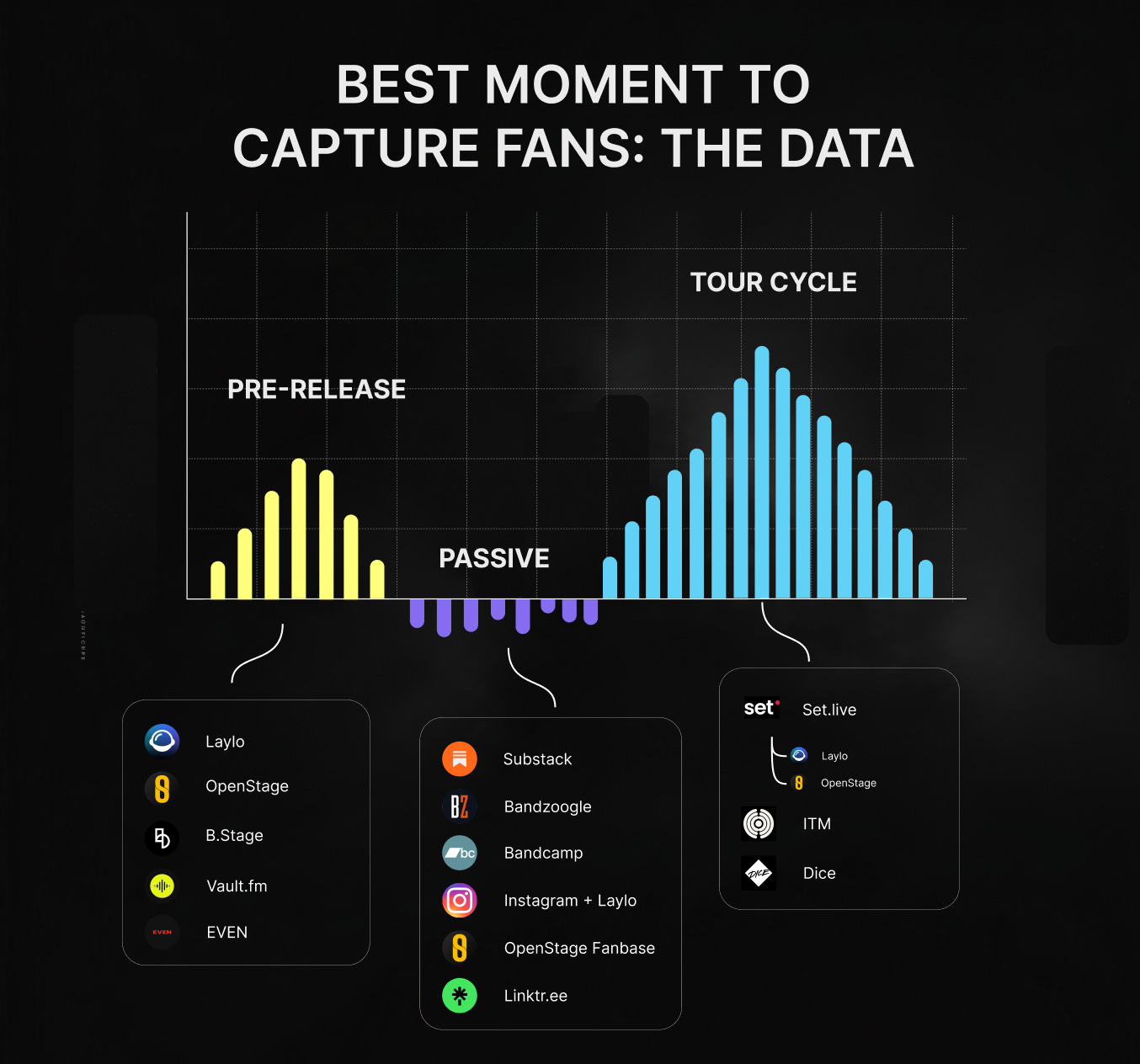
Based on 200 million data points collected by Laylo, there are three clear hot-spots that jump out. Today we’re mapping them and listing some tools you can use to capitalize.
The tl;dr
Pre-release: the tease of new music creates a strong fomo moment to sign-up.
Passive conversions: You can collect steady and consistent fan sign-ups from your website or socials, but you can really accelerate this with a good incentive. (Note: Instagram has the best conversion - we’ll get into this later).
Tour cycle: The biggest and most powerful moment is the tour cycle, when the excitement and engagement with fans is the highest.
Let’s go through them all in more detail.
Quick caveat
Much of the data and case studies here come from relatively established artists. Of course, it’s easier to convert an owned audience when you have a large following and listener-base already. “Direct to fan” is not a single magical solution, as we’ve written plenty about, and it’s never as simple as replicating a bigger artists’ playbook.
However, this data still provides a lot of insight into fan behaviour which you can put into practice from the very earliest days to start building a foundation. We’ve also tried to give simplified variations if you’re in the early stages of your music career.
Hotspot 1. Before a Release
The anticipation before a release is the perfect moment to build a fan relationship. People love to hear unreleased music before anyone else so they’re much more likely to sign up. For example:
In 2025, Skrillex famously posted this picture …
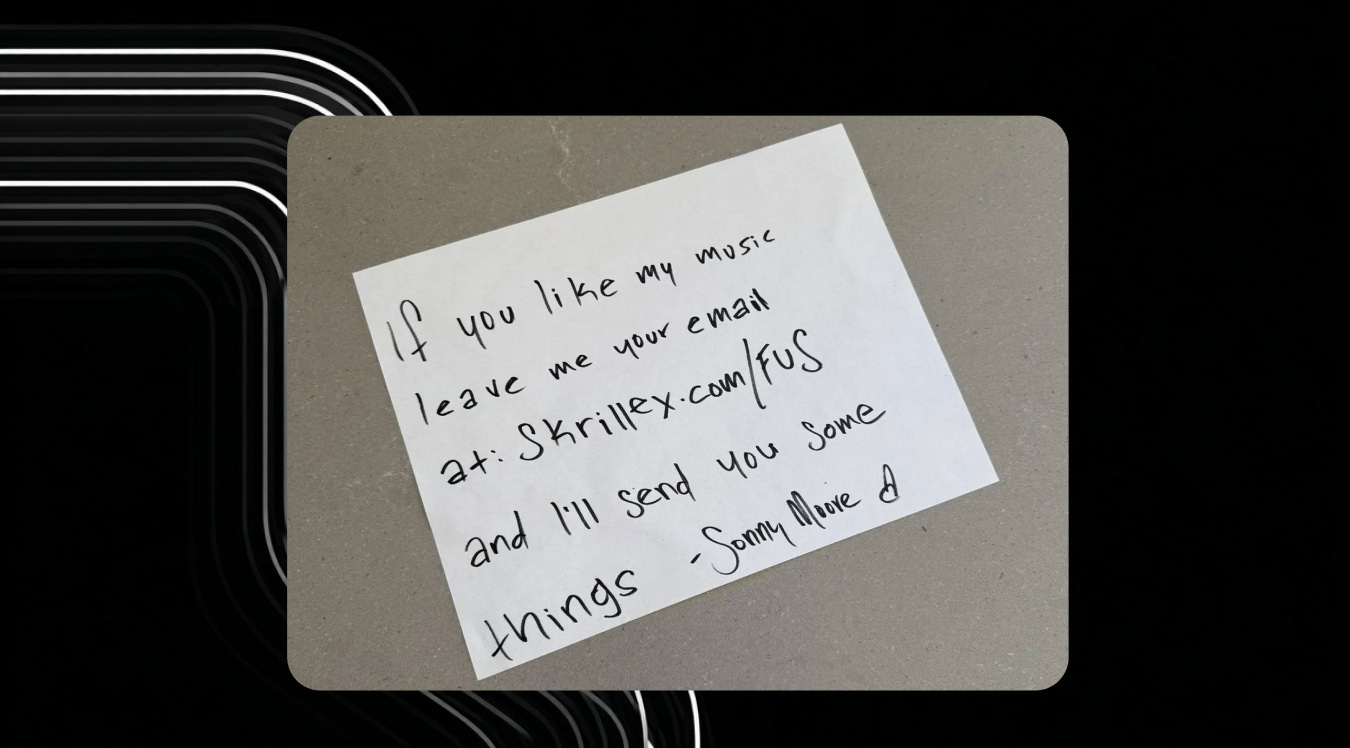
The next day Skrillex sent the full 34 track album (on Dropbox!) to everyone who signed up, before the album was available on Spotify and streaming. It drove tens of thousands of sign-ups.
Not only did it convert fans into an “owned audience” it turned into a viral moment of its own through organic sharing and fomo.
Obviously, if you’re Skrillex, you can tease anything and drive sign-ups. But the same structure still applies for smaller independent musicians.
How to do it:
Rather than doing a Spotify pre-save campaign you can give fans early access to music in exchange for a phone number or email. Even if it’s only ten people, make sure those fans hear it first.
Offer unreleased audio, remixes, demos, acoustic or different versions of the track as a teaser incentive to subscribe.
Host listening parties with an RSVP to hear new music before wide release.
Key tools:
Hotspot 2. “Always-on” sign-ups (Instagram is powerful)
Most artists have a passive sign-up form. Maybe a LinkTree signup or a website form for emails.
However, you can dramatically increase its effectiveness by linking it to an incentive. According to Laylo, sign-ups are 7x stronger when linked to an incentive, drop or call-to-action. A basic landing page or sign-up form might not be strong enough. So make sure you give fans a reason to join your world!
The power of Instagram?
Instagram is a surprising winner for capturing passive sign-ups, giving you the fastest route to convert your social audience into an “owned audience.”
For example, Sombr recently collected 45,000 signups from a single Instagram Story. According to Luminate’s recent report, Instagram has the highest concentration of actively-engaged music superfans, and fans on IG are more likely to convert than TikTok. Instagram is also better set-up to capture fans via bio links and dms.
How to do it:
Always have an email or SMS sign-up visible on your bios and website (ideally linked to an incentive such as exclusive music, merch reward, presale or early access).
Make sure you always have a fan-capture tool clearly visible on your Instagram profile, and regularly post in your Story flow.
Tools:
Bandzoogle (basic artist landing page)
Bandcamp (free track in exchange for email)
Linktree (basic link-in-bio page)
Laylo + Instagram (advanced capture can even trigger auto-dms to fans that engage with you on IG prompting them to sign up)
Openstage Fanbase API (create an entire branded website and experience to covert fans).
Hotspot 3. Live events and touring
However … the most important moment (by far) is your live shows.
Laylo says 70% of fan list growth happens during tour cycles. This makes sense. Live shows are the point of most excitement and most engagement. Plus there are lots of “moments” to capture fans: tour announcements, RSVPs, presales, ticket sales and the show itself.
Capturing fans at the show
One of the biggest new routes to capture fans is at the live event itself. Artists notoriously capture little or no information about who’s at their shows, but that’s starting to change. Here are some recent examples:
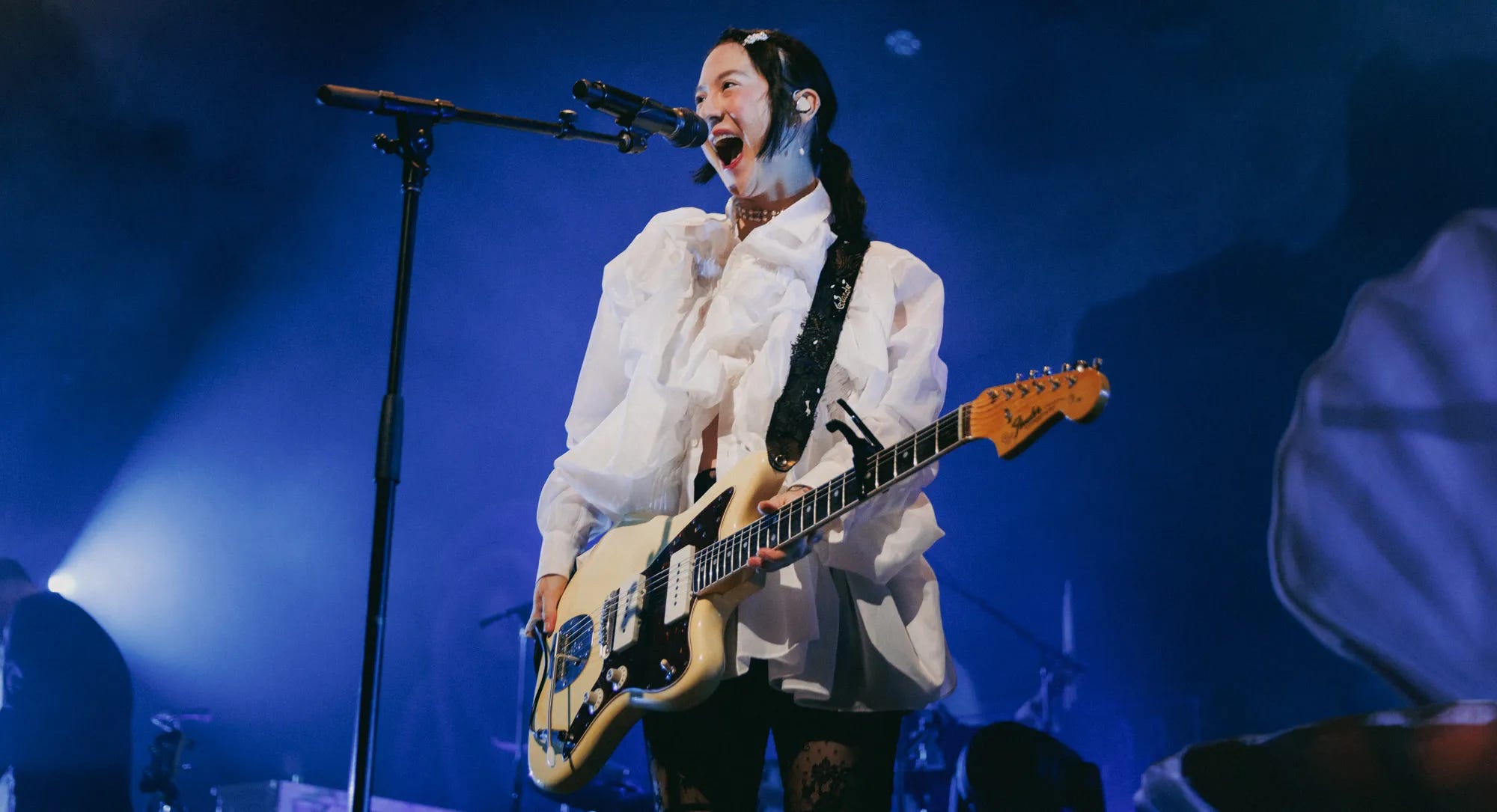
Japanese Breakfast - the indie pop band place a QR code in the venue that fans can scan to win a signed postcard or a merch bundle. It’s capturing hundreds of phone numbers and emails every night, all routed back to their fan management platform.
Mount Joy - Mount Joy did a similar thing, where one fan who scans the QR code at the venue gets to watch the band from the side of the stage.
Alicia Keys - gave away signed set lists on her recent US tour, generating 31,500 email sign-ups over the two month tour.
Corey Kent - the country star generated 75,000 sign-ups with the same strategy.
They’re doing this with a tool called Set.live to power the QR code. Then linking all the emails and phone numbers to fan platforms like OpenStage or Laylo.
What about smaller artists?
Of course, when you’re playing 6,000 cap venues like Corey Kent, it’s easy to drive a lot of conversions. But even as a small artist you can still capitalize on any live event.
Use RSVPs to capture anyone with intent to come to a show.
If you’re hosting a show or pop-up, use a service like ITM where you keep all emails and data of attendees.
Use QR codes to capture fans at the show, whether it’s a support slot, local festival, pop-up, street performance or headliner.
Combine these live moments with a strong call-to-action (like free merch or exclusive content opportunities) you massively increase the chance of converting those early fans to your owned audience.
Tools:
Set.Live - powers live experience QR codes (integrates with fan management tools OpenStage and Laylo).
ITM - powers tickets, RSVPs, merch all in one platform with complete visibility into attendees.
Dice - digital ticketing with fan insights.
Laylo - Ticket drop links and RSVPs.
Vault.fm - Ticket drops
Thanks for reading
If you found this useful, please do forward it to your colleagues or share with your friends. If you have questions or thoughts, reach out to me on LinkedIn or by email at benjamin@stvdio.io. See you next week with another music industry report.
Amazing job. Super useful tips!
Saved!