
Music *needs* human curation (here's why)
The science behind human recommendations

STVDIO tracks the future of music. Helping 3,000+ artists, music industry professionals, founders and investors navigate music tech trends and behavioural shifts.
Every Monday we send you a deep dive on where the music industry is going. Today we’re exploring the importance of human curation in music. If you find this useful, please forward to your friends or colleagues.
Imagine it’s Christmas 2028.
Your Spotify Wrapped is full of artists you don’t recognise.
You like the songs, sure.
You remember listening to them on repeat (they were on your running playlist and your study playlist).
And if you listen back, the music resemble artists you used to know, but you can’t quite remember their name.
That’s because your Spotify Wrapped 2028 is all AI.
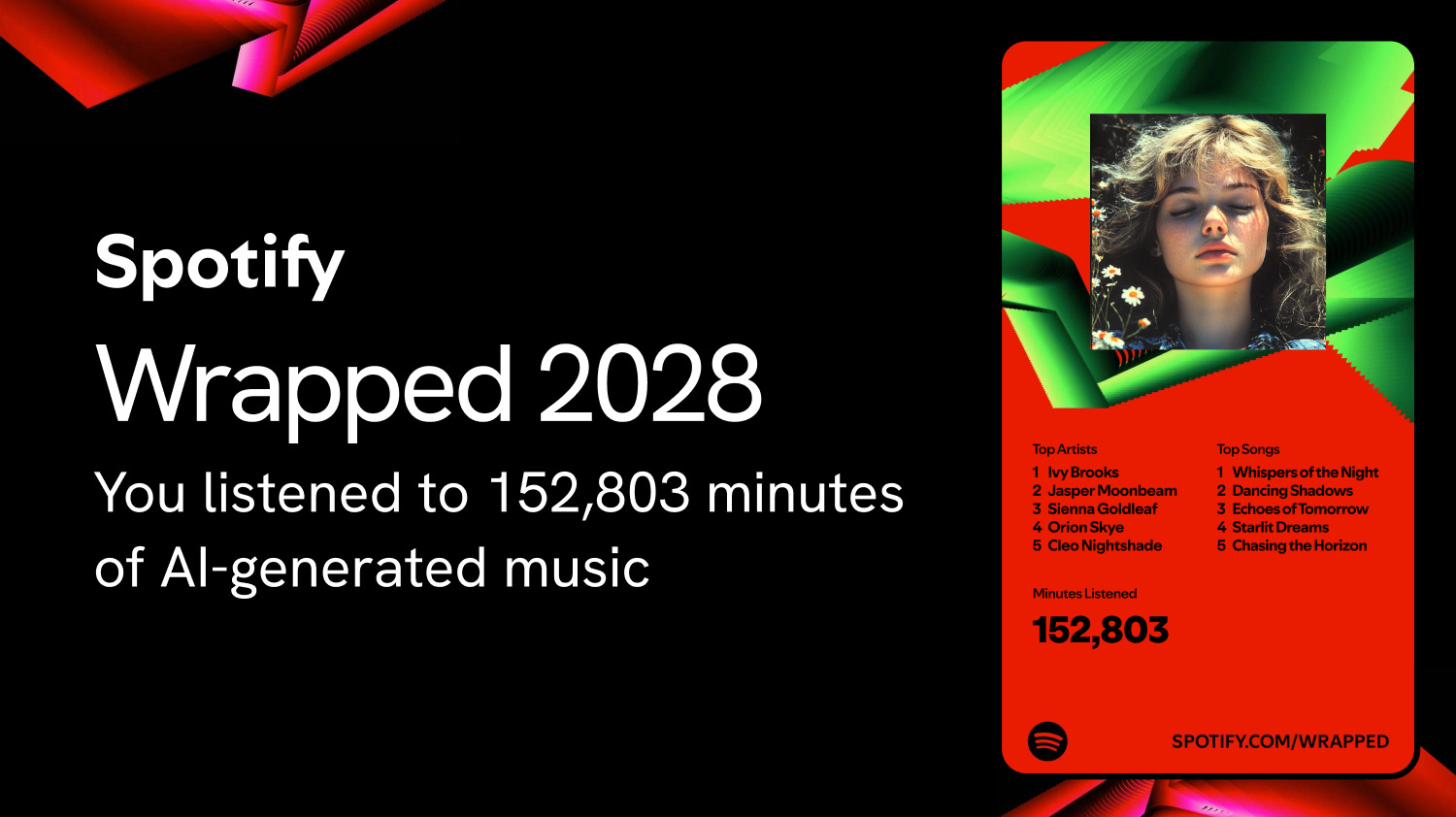
Somewhere in 2026, the algorithm started recommending you AI songs that sound similar to artists you like.
You didn’t really notice at first.
An AI generated remix of an Aphex Twin song that showed up in your Release Radar.
An AI song trained on Fred Again that you didn’t skip during your work-out session.
Spotify noticed these “positive signals” and started recommending more. Passive background noise that didn’t challenge you … but didn’t offend you either.
The self-reinforcing loop of Spotify’s algorithm fed on itself for a year until 90% of your “Discover” playlist was AI-generated.
It happened slowly so you didn’t notice.
Okay, okay this is a dystopian idea.
But it’s not impossible to imagine, right?
Last week, we explore how Spotifty was leaning too far into sloppification algorithms.
This is the path we’re on if streaming services rely too heavily on AI algorithms and AI generated music.
Today I want to share why I care so much.
We desperately need to preserve human curation in music.
And I have the nerdy science to explain why …
AI algorithms flatten music discovery
Streaming algorithms create a feedback loop of luke-warm music.
It over-indexes on passive music that you “like.”
But doesn’t quite capture what you “love.” And doesn’t ever ask you what you “dislike.”
This feedback loop disproportionately benefits familiar, popular artists, background music (and, soon, AI generated tracks).
The missing element: extremes of emotion
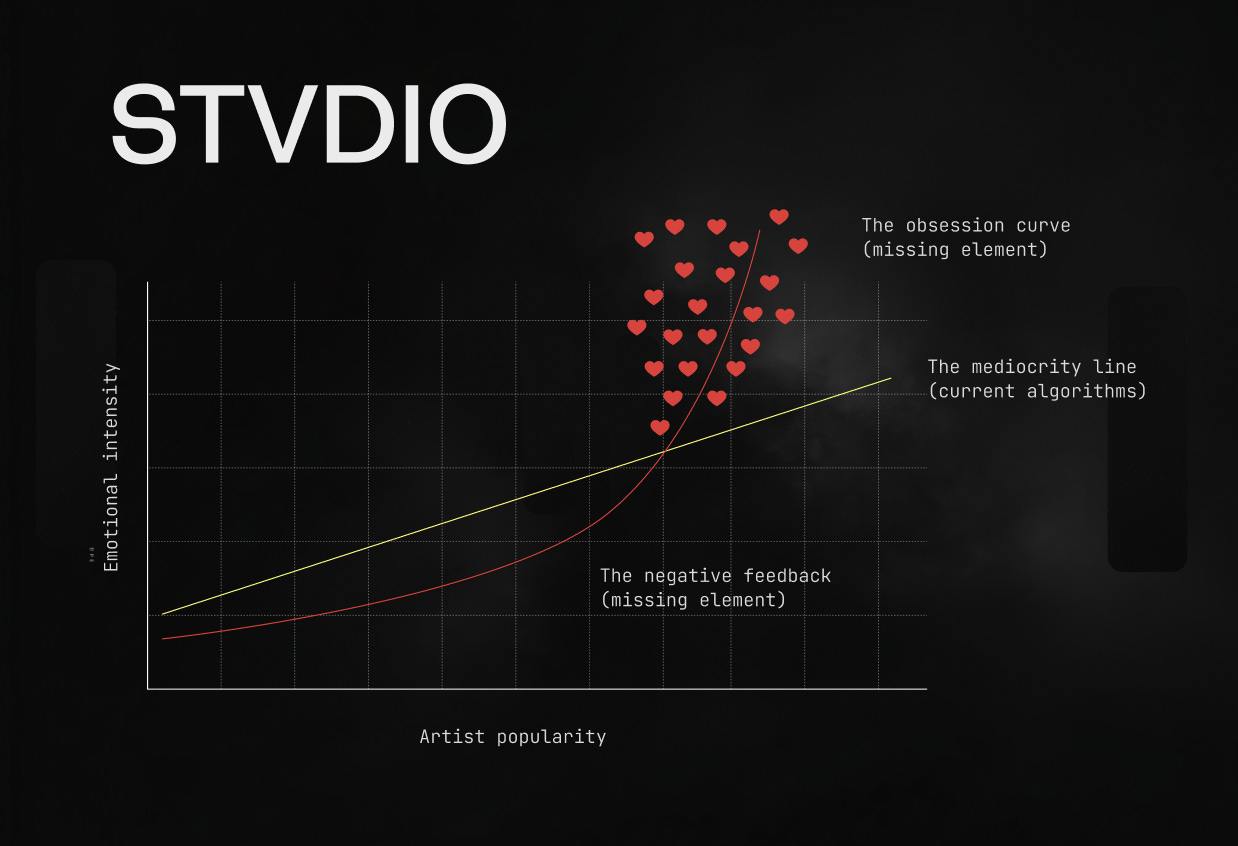
AI algorithms are really bad at capturing the extremes of emotional connection with a song. Spotify knows which music you listen to a lot, but it doesn’t know how strongly you feel.
But …
If we actively capture the extremes of music sentiment (the songs you love and, crucially, the songs you dislike) we get much better recommendations.
Here’s how we know …
Analysing 6 million song ratings
A music discovery app called Piki has captured more than 6 million song ratings, tracking a wider range of emotional connection than a normal streaming service.
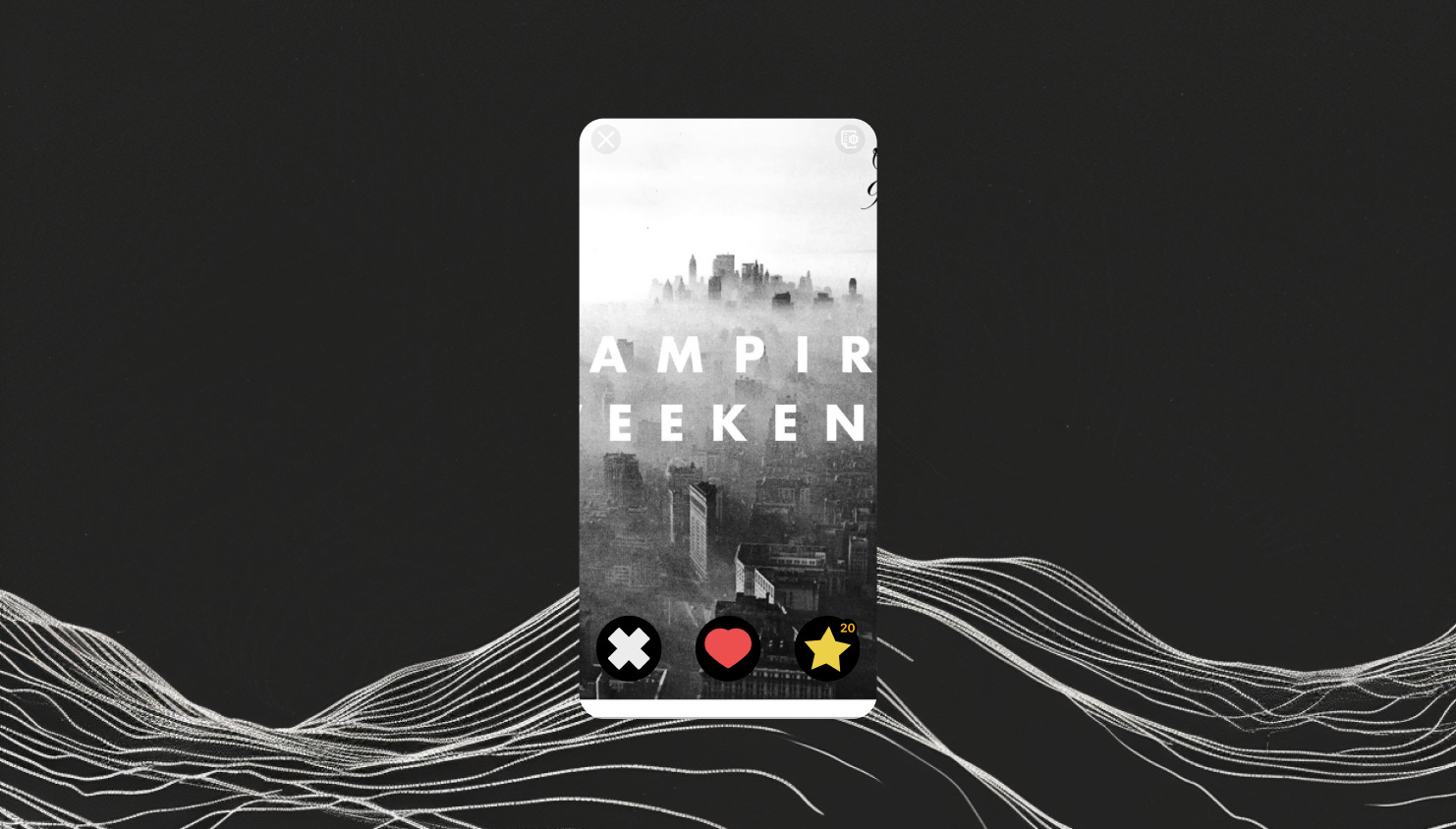
You are presented with songs and prompted to “like,” “dislike,” or “superlike” every song.
They got some pretty interesting results — published by the founder in two academic articles here and here. Tl;dr:
1. Superlikes are much higher for mid-level artists
Although general “likes” are correlated with artist popularity, “Superlikes” are strongest for artists at the 70% popularity region.
These are mid-level artists, like Kaytranada and The Marias.
People like superstars … but they LOVE music by smaller artists. The intensity of music connection is much stronger at the middle level, and regresses again at the most popular level.
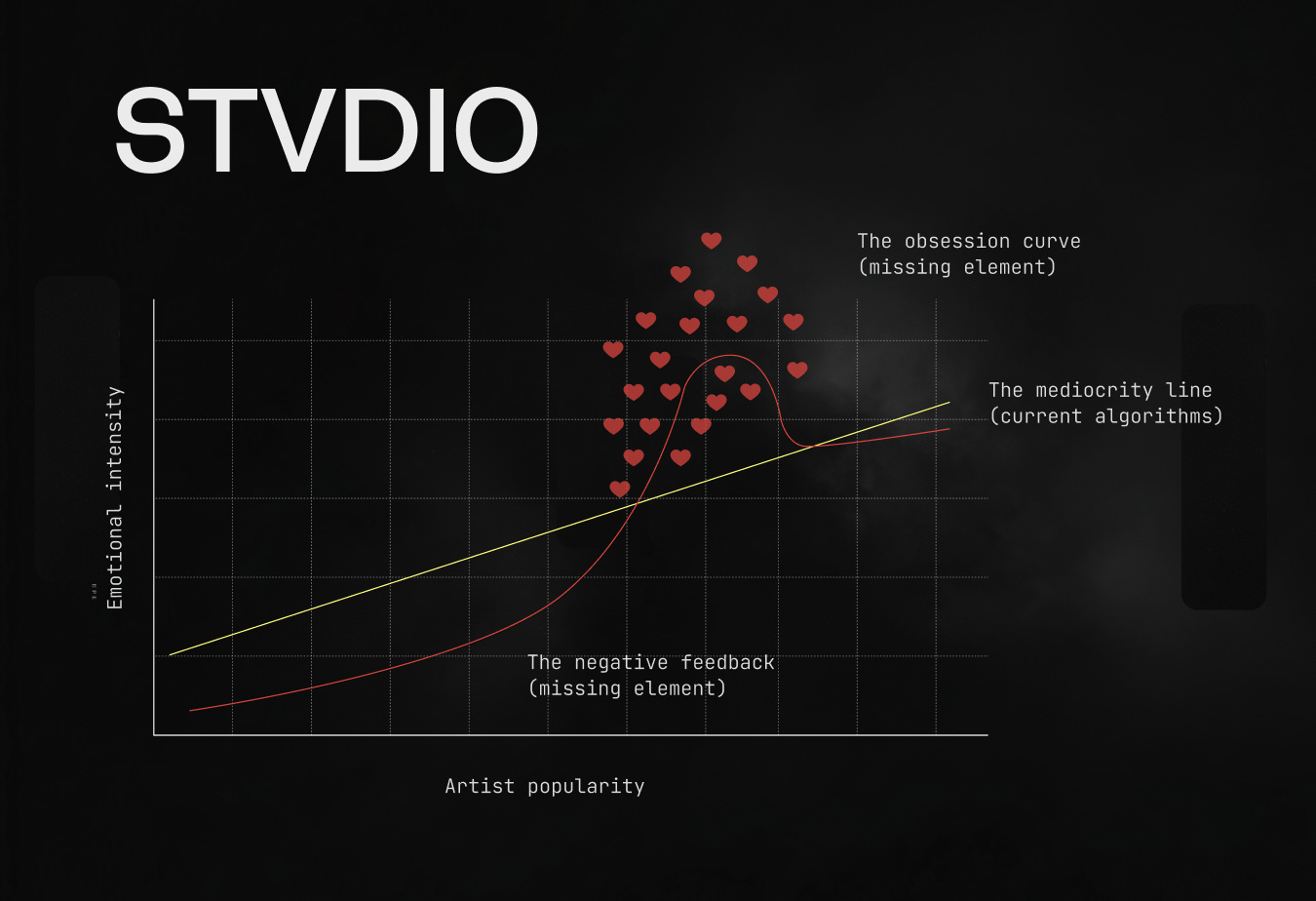
Conclusion: algorithms are under-serving smaller, independent artists because they are too busy indexing on passive “like” signals and tracking popularity. The middle-class of artists are much more deserving of exposure, and fans would be surprised and delighted at hearing more from them.
2. Dislikes improved the recommendation output by 18%
When the Piki team trained an algorithm which included a users’ active dislikes, it improved the liklihood of that user liking the next recommendation by 18%.
Conclusion: The negative feedback gives the algorithm a much clearer signal about your music sentiment.
The overall conclusion is clear: human curation unearths the extremes of music sentiment. And this is where the most powerful discovery and recommendation potential lives.
Why current AI recommendation are weak
The current systems are weak for a few reasons.
They’re designed to increase engagement - Spotify is not incentivized to push risky songs to you. Spotify’s business model relies on keeping you engaged for as long as possible. They’re maximised for retention, so the algorithm wants to give you songs you probably like. It has no incentive to present you with songs you’ll dislike, even if that feedback is extremely useful. The algorithm plays it safe with familiarity and median-intensity sentiment.
Hard to capture extreme positive sentiment - Spotify collects mostly median-positive signals. If you stream a song all the way through, that counts as a positive signal. But how strong was your feeling? Did you really love that song? Or was it just on a playlist you listened through? Did you play it on repeat because you were obsessed, or because you were studying for three hours? Capturing the strong positive sentiment is hard.
They do not collect negative sentiment - Likewise, Spotify doesn’t collect negative sentiment very well. Sure, the algorithm knows when you skip a track. But is that because you don’t like it? Or did it just not fit the mood (of course I’ll skip a Sufjan Stevens song while I’m working out in the gym, even if Sufjan Stevens is my favourite artist of all time).
It reinforces popularity bias - Songs with high play counts are considered “good” so are recommended more often. It creates a feedback loop of popularity bias.
They suffer from selection bias - User search is much more likely to gravitate to familiar or popular artists. Algorithms often start from a point of selection bias.
Why does it matter?
It matters because algorithms can be responsible for making or breaking an artist’s career. They decide whether an artist can pay rent next month, or whether they get to make another album.
The algorithms are shaping new music culture.
The data suggests we are under-serving the middle-class of artists who deserve more exposure. And to whom it would make the most difference in their career.
But on top of that, we are under-serving music fans.
There is nothing more beautiful in the world than discovering a new song you love.
It’s the best feeling.
When your brain hears a new song, it gets flooded with excitement. You go into rabbit-hole discovering everything this artist has ever written. You want to send it to everyone you know.
This is where fandoms grow and deeper connections form.
Friction is important
A final note. Algorithms are designed for removing as much friction as possible.
And that’s fine sometimes.
But I really like this take from MusicX — friction is a choice. And if streaming algorithms continue to remove friction, we will have to make the choice to hunt out music for ourselves.
Sometimes discovering great music is difficult. It requires friction.
That’s where the reward is.
You’re supposed to rummage through crates of different vinyl before you find something you really love.
You’re supposed to read music blogs until something hits you hard.
You’re supposed to listen to radio shows where you might not like all the music.
The “reward” of an incredible new discovery is richest when you’ve put in work to get there. By overcoming some friction your feelings are intensified.
This is where AI recommendation systems often fall short. They trend to the mean. Spotify serves you 50 songs you “probably like” instead of something risky that you might really love.
Spotify doesn’t want to challenge you.
Sometimes … it doesn’t really want you to notice at all. As long as you keep listening.
So, this is a call. Seek out friction in music discovery sometimes. We need more human curation. More mistakes. More songs you don’t like … but more music you fall in love with.
Thanks for reading!
If you found this useful, please do forward it to your colleagues or share with your friends. If you have questions or thoughts, just reply to this email or reach out to me on LinkedIn. See you next week with another music industry report.
I agree with the core premise here — retention-optimized algorithms flatten taste. They surface what’s familiar, not what’s deeply loved.
But I’m not convinced the answer is returning to a smaller class of human gatekeepers either.
The real issue isn’t “algorithm vs. human.”
It’s who gets to signal what matters — and whether that signal is transparent.
Right now discovery is shaped inside closed systems by proprietary algorithms and editorial playlists. That structure favors safety and incumbency.
What if instead of optimizing for passive consumption, we optimized for active participation?
When listeners have to signal support — not just stream — you start capturing a very different dataset. You measure conviction, not convenience.
Human taste absolutely matters.
The question is: do we centralize it again… or distribute it?
That’s the more interesting frontier. That's what we're focused on at audiopool.io
wow. thank you for such detailed observations about the difference in emotional response to AI music vs human music. imagine using science to defeat AI! I agree 100% that music is about feeling something. since AI doesn't yet know to feel it can't compete with a human.